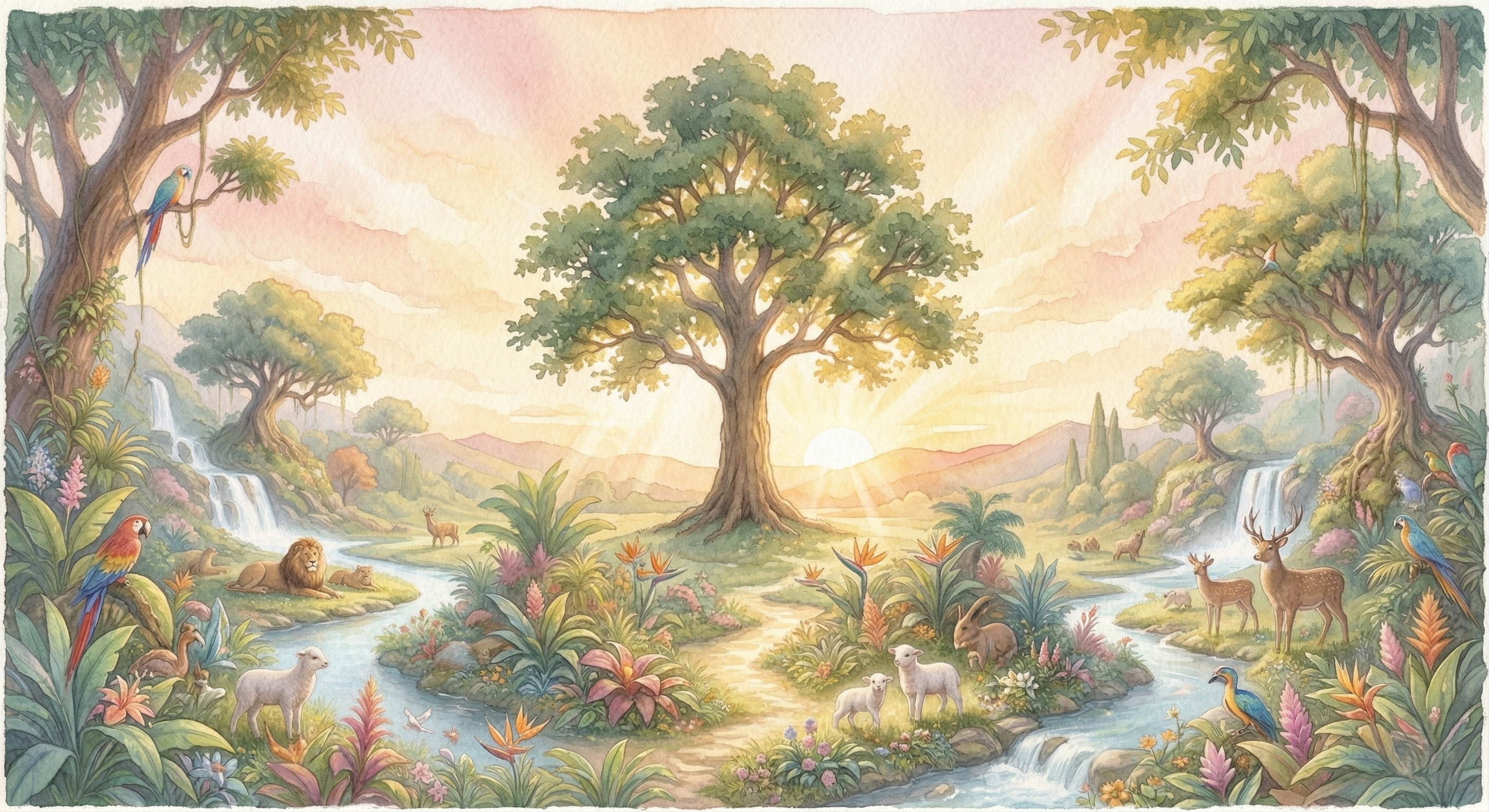
창세기 3장 1절에서 6절, 뱀의 유혹과 인류 첫 범죄의 순간을 통해 우리 삶의 결핍을 돌아보고, 십자가의 대속적 사랑으로 회복되는 구속사적 위로를 전합니다.
Explore the story of temptation in Genesis 3:1-6, reflecting on human frailty and the redemptive love of the cross that restores our broken relationship with God.
지친 하루의 끝에서 문득 이런 생각을 해보셨나요?
어느 날 문득, 세상 모든 것이 어긋나 있다는 느낌을 받은 적이 있으신가요? 분명 최선을 다해 살아가고 있는데도 마음 한구석에는 채워지지 않는 깊은 갈증이 있고, 사랑하는 사람들과의 관계조차 때로는 가시처럼 서로를 찌르곤 합니다. 우리는 왜 이토록 평안을 얻기 힘든 것일까요? 성경의 첫머리인 창세기 3장은 이 모든 엉클어진 실타래의 시작점을 다정하게 보여줍니다. 그것은 단순한 옛이야기가 아니라, 오늘날 우리가 겪는 모든 아픔과 결핍의 원인을 비추는 거울과도 같습니다.
아주 작은 틈을 타고 들어온 속삭임
에덴동산은 부족함이 없는 완벽한 안식처였습니다. 하지만 그 평화로운 풍경 속으로 뱀이 다가와 하와에게 묻습니다. "하나님이 참으로 너희더러 동산 모든 나무의 실과를 먹지 말라 하시더냐?"(창 3:1). 이 질문은 매우 교묘합니다. 하나님께서는 분명 모든 것을 풍성히 주셨고 단 하나, 선악을 알게 하는 나무의 열매만을 금하셨습니다. 그러나 뱀은 '모든 나무'라는 단어를 사용해 하나님의 풍성한 사랑을 '금지'와 '제약'으로 비틀어 버립니다.
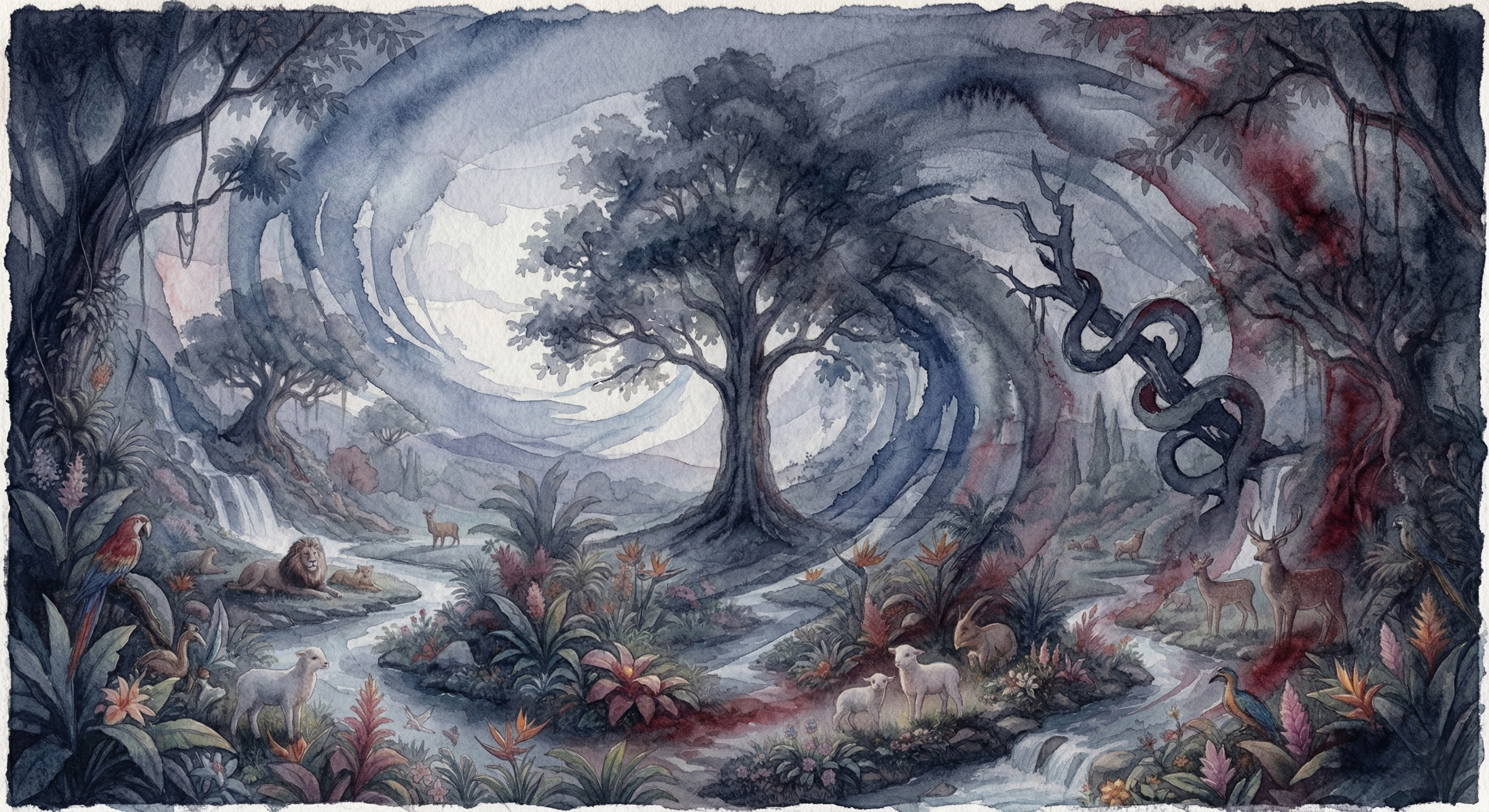
우리의 삶도 이와 닮아 있습니다. 하나님께서 이미 주신 수많은 은혜보다는, 내가 갖지 못한 단 하나에 집중하게 만드는 세상의 속삭임이 우리를 흔듭니다. "네가 이것만 더 가지면 행복해질 거야", "하나님은 왜 너에게 이것을 허락하지 않으실까?"라는 의심의 안개가 우리 마음을 덮을 때, 우리는 이미 에덴의 평화를 잃어버리기 시작합니다.
하나님을 '예표'하는 신뢰의 울타리
하나님께서 선악과를 두신 것은 인간을 시험하기 위해서가 아니었습니다. 그것은 피조물인 우리가 창조주 하나님과의 올바른 관계 안에 머물 때 가장 행복하다는 것을 가르쳐 주시는 '사랑의 신호등'이었습니다. 성경에서 이 사건은 훗날 오실 예수 그리스도의 순종을 미리 보여주는 '예표'가 됩니다. 첫 사람 아담은 그 울타리를 넘어 자신의 주인이 되려 했지만, 훗날 오실 '마지막 아담' 예수님은 하나님의 뜻에 온전히 순종하여 우리를 다시 그 울타리 안으로 부르실 것이기 때문입니다.
보암직도 하고 먹음직도 한 유혹의 이름
하와가 나무를 본즉 "먹음직도 하고 보암직도 하고 지혜롭게 할 만큼 탐스럽기도" 했습니다(창 3:6). 이 구절은 인간의 본능적인 욕망을 너무나 생생하게 묘사합니다. 눈에 보이는 화려함과 나를 돋보이게 해줄 것 같은 유혹 앞에서, 우리는 하나님의 말씀을 잊어버립니다. 결코 죽지 않을 것이며 눈이 밝아져 하나님과 같이 될 것이라는 뱀의 거짓말은, 사실 우리 안에 있는 뿌리 깊은 교만을 건드린 것입니다.
우리가 오늘날 겪는 고통의 대부분은 내가 내 인생의 하나님이 되려 할 때 발생합니다. 내가 모든 것을 결정하고, 내가 선악의 기준이 되려 할 때 우리는 겉으로는 화려해 보일지 모르나 속은 텅 빈 열매를 먹는 것과 같습니다. 하와와 아담이 열매를 먹었을 때 그들이 마주한 것은 신적인 능력이 아니라, 자신의 벌거벗은 초라함과 두려움뿐이었습니다.
깨어진 마음을 덮어주는 구속의 사랑
죄를 짓고 두려워 숨은 아담과 하와를 향해 하나님은 "네가 어디 있느냐"라고 부르십니다. 몰라서 묻는 것이 아니라, 관계가 깨어져 멀어진 자녀를 찾는 애끓는 아버지의 음성입니다. 비록 인간은 불순종을 선택했지만, 하나님은 그들을 내쫓기 전 가죽옷을 지어 입히셨습니다. 누군가 대신 죽어야만 얻을 수 있는 그 가죽옷은, 훗날 십자가에서 벌거벗겨진 채 우리의 부끄러움을 덮어주실 예수 그리스도의 희생을 암시합니다.
창세기 3장의 슬픈 이야기는 여기서 끝이 아닙니다. 비록 우리가 매일의 삶 속에서 보암직한 유혹에 넘어지고 마음이 부서질지라도, 하나님은 여전히 우리를 부르고 계십니다. 우리의 실패는 십자가의 대속적 사랑 안에서 소망으로 바뀝니다. 그분은 우리의 모든 죄와 부끄러움을 덮으시고, 잃어버린 낙원보다 더 아름다운 영원한 안식으로 우리를 안내하십니다.
당신이 오늘 어떤 유혹 앞에 서 있든, 혹은 어떤 실패로 인해 낙심하고 있든 기억하세요. 하나님의 사랑은 당신의 죄보다 큽니다. 그분은 오늘도 당신의 이름을 다정하게 부르며, 십자가의 보혈로 지은 은혜의 옷을 들고 기다리고 계십니다.
오늘 당신의 마음은 어디를 향하고 있나요? 나를 하나님처럼 높여줄 화려한 열매인가요, 아니면 나를 위해 낮아지신 예수님의 따뜻한 품인가요?
English Content: The Shadow of Doubt and the Light of Grace
Have you ever felt a lingering sense of emptiness despite your efforts?
At the end of a long day, have you ever wondered why life feels so fundamentally broken? Even in moments of success, there is often a quiet ache in the soul, a feeling that we were made for something more, something pure and lasting. This restlessness is not a flaw in your character; it is a memory of a home we once had. Genesis 3:1-6 tells the story of how that peace was interrupted, but more importantly, it points us toward the path of restoration through a love that refuses to let us go.
The Subtle Scent of Deception
The serpent’s approach to Eve was not a direct assault but a gentle twist of truth. "Did God actually say, ‘You shall not eat of any tree in the garden’?" (Gen 3:1). With one question, the serpent shifted Eve's focus from the thousands of trees she could enjoy to the one she couldn't. It painted a picture of a restrictive, stingy God rather than the generous Creator who had provided everything.
In our own lives, the "serpent" often whispers through social media, advertisements, or our own inner insecurities. It makes us look at our neighbors' lives and ask, "Why don't I have that? Is God holding out on me?" When we begin to view God’s boundaries as chains rather than protection, the seeds of doubt take root in our hearts.
The 'Foreshadow' of Perfect Obedience
The tree of the knowledge of good and evil was a 'foreshadow' of the choice every human soul must make: will we trust God's definition of what is good, or will we insist on being our own gods? Adam, the first representative of humanity, chose self-exaltation over trust. Yet, this tragic moment sets the stage for the "Second Adam," Jesus Christ. Where Adam failed in a garden of plenty, Jesus remained faithful in a desert of hunger and ultimately in the garden of Gethsemane, saying, "Not my will, but Yours be done."
The Allure of What Sparkles
Eve looked at the fruit and saw that it was "good for food, and that it was a delight to the eyes, and that the tree was to be desired to make one wise" (Gen 3:6). This is the classic anatomy of temptation: physical appetite, aesthetic beauty, and the promise of status. It looked like the key to ultimate freedom. But sin is always a bait-and-switch. It promises life but delivers death; it promises wisdom but leads to confusion.
When Adam and Eve ate the fruit, their eyes were indeed opened, but they didn't see the world like God. Instead, they saw their own shame. They realized they were naked and, for the first time, felt the icy grip of fear. The intimacy they once shared with God was shattered, replaced by the need to hide.
The Garment of Mercy
Even in the wake of this rebellion, God's response was one of pursuit. He called out, "Where are you?"—the first missionary call in history. And before they were sent out into a world of thorns and thistles, God performed the first sacrifice. He clothed them in skins, covering their shame with the cost of a life.
This act points directly to the Cross. On Calvary, Jesus was stripped of His garments so that we might be clothed in His righteousness. His blood is the ultimate "covering" for our brokenness. The story that began with a bite of stolen fruit in a garden ends with the fruit of life on a rugged cross.
No matter how far you feel you have wandered, or how many times you have reached for things that cannot satisfy, God is looking for you. He is not a distant judge waiting to condemn, but a Father offering a grace that covers every scar.
In the quiet of this moment, what are you trying to hide from God, and will you let His love cover it today?
Cuerpo en Español: La Fragilidad de la Libertad y el Abrazo del Redentor
¿Alguna vez ha sentido, al final de un día agotador, que falta algo esencial?
Tal vez se encuentre rodeado de comodidades, y aun así, su corazón se siente inquieto. Esa sensación de que el mundo está "desafinado" no es casualidad. Todos llevamos dentro el eco de un paraíso perdido, una nostalgia de una relación perfecta que se rompió hace mucho tiempo. Génesis 3:1-6 nos relata el momento en que la desconfianza entró en la experiencia humana, pero también nos susurra la promesa de un rescate que solo el amor sacrificial puede ofrecer.
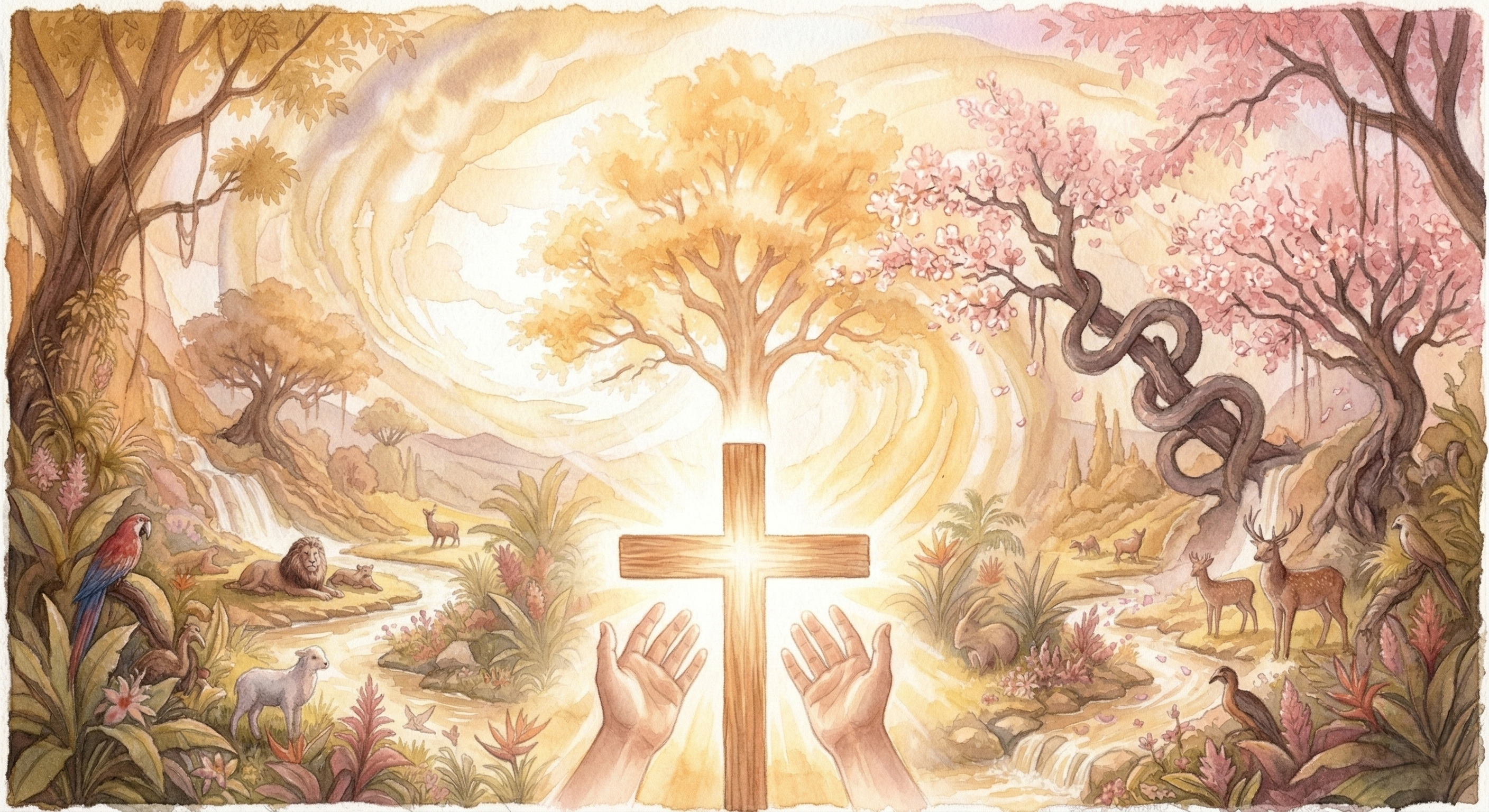
La Sutil Distorsión de la Verdad
La serpiente no se presentó con violencia, sino con una pregunta cargada de veneno sutil: "¿Conque Dios os ha dicho: No comáis de todo árbol del huerto?" (Gén 3:1). Note cómo cambia la perspectiva. Dios había dicho: "De todo árbol podéis comer, excepto de uno". La serpiente, en cambio, enfoca la atención de Eva en la única restricción, haciendo que la generosidad de Dios parezca tiranía.
En nuestra cotidianidad, a menudo caemos en la misma trampa. Ignoramos las mil bendiciones que nos rodean para obsesionarnos con lo que nos falta. Empezamos a dudar de la bondad de Dios, creyendo que Sus mandatos son obstáculos para nuestra felicidad, cuando en realidad son los límites que protegen nuestra paz.
El Sacrificio que se 'Prefigura'
Este triste episodio en el Edén prefigura una realidad mucho más grande. El fracaso de Adán bajo el árbol del conocimiento nos prepara para ver la victoria de Cristo en el madero de la Cruz. Mientras que Adán buscó ser como Dios por sus propios medios, Jesús, siendo Dios, se hizo hombre y se humilló a Sí mismo para rescatarnos. La desobediencia de uno trajo la ruptura, pero la obediencia perfecta del otro trajo la sanación.
El Brillo Engañoso de la Autonomía
Eva vio que el fruto era "bueno para comer, y que era agradable a los ojos, y árbol codiciable para alcanzar la sabiduría" (Gén 3:6). Es la descripción perfecta de nuestras luchas modernas: el placer inmediato, la apariencia externa y el deseo de control absoluto. Al morder el fruto, el hombre y la mujer pensaron que alcanzarían la cima, pero cayeron en el abismo de la culpa.
La mayor mentira del pecado es que seremos libres si nos alejamos de Dios. Sin embargo, Adán y Eva descubrieron que, lejos de la Fuente de Vida, solo hay desnudez y miedo. Intentaron cubrirse con hojas de higuera, pero ningún esfuerzo humano puede ocultar el vacío de un alma que ha perdido su centro.
La Túnica de la Esperanza
A pesar de la traición, Dios no abandonó a Sus hijos. Salió a buscarlos entre los árboles, no con un rayo destructor, sino con una pregunta de invitación: "¿Dónde estás?". Y antes de que tuvieran que enfrentar las consecuencias de su error, Dios mismo sacrificó un animal para vestirlos con pieles.
Esa primera túnica es un abrazo de gracia. Nos dice que, aunque nosotros fallamos, Dios proveerá el medio para cubrir nuestra vergüenza. Ese animal sacrificado señalaba hacia el Cordero de Dios, quien cargaría con nuestras culpas en la cruz para devolvernos la dignidad perdida. Hoy, ese mismo amor nos busca, nos perdona y nos invita a caminar de nuevo en Su luz.
¿Qué "hojas de higuera" está usando hoy para esconder su dolor, y se atrevería a dejarse vestir por la gracia de Dios?
#하나님의사랑 #십자가 #구속사 #마음치유 #위로의글
#성경묵상 #은혜 #예표 #회복 #신앙상담 #일상의신앙 #영성 #기독교블로그 #사랑
#희망 #생명나무 #아담과하와 #Genesis3 #GardenOfEden #FallOfMan #GodsLove #Cross #Redemption #Healing #Comfort #BibleStudy #Grace #Foreshadow #Restoration #Faith #ChristianLiving #Spirituality #Hope #Salvation #JardinDelEden #LaCaida #AmorDeDios #Cruz #Redencion #Sanidad #Consuel #Prefigura #Restauracion #Fe #VidaCristiana #Espiritualidad #Esperanza #Salvacion #Jesucristo #Misericordia


